Cerebral Autoregulation (CA)
Curated resources on cerebral autoregulation
Browse webinars, interviews, and publications all in one place, helping you connect physiological principles with clinical monitoring and decision-making.
Webinars
A selection of expert-led sessions from the Case Studies in Neurocritical Care AI webinar series, examining cerebral autoregulation, pressure-flow relationships, and how clinicians assess brain perfusion in real time.
Browse all webinars to explore the full library across neuromonitoring topics.
- All
- Case Studies in Neurocritical Care AI
- Brain Matters
Characterizing the Physiology of Circulatory Arrest in Humans
Dr. Mypinder Sekhon presents a multi-pronged approach for the physiology of the circulatory arrest in humans, to understand the processes that underpin death determination and cerebral ischemia.

Personalizing the Pressure Reactivity Index for Quantifying Cerebral Autoregulation in Neurocritical Care
Jennifer Briggs presents a personalized approach to the Pressure Reactivity Index (PRx) for quantifying CA. Her work improves the accuracy and reliability of PRx by accounting for patient-specific variability and algorithmic sensitivity, advancing clinical decision-making in neurocritical care.
Continuous Assessment of Cerebral Autoregulation in TBI Patients Using ICM+
Dr. Peter Smielewski of Cambridge Neuroscience presents the current state of the art in continuous assessment of cerebral autoregulation in patients undergoing neuro-monitoring. In particular, he illustrates a practical approach to the autoregulation-oriented management of TBI patients and discusses the clinical impact of such therapy and the road ahead.

Interviews & Podcasts
Discussions with clinicians and researchers on CA monitoring, its clinical interpretation, and how it is being integrated into modern neurocritical care practice.
Visit the full Interviews & Podcasts page to discover more perspectives from across the field.
Automating TCD with Seth Will & Corey Thibeault
Seth Wilk (VP of Research) and Corey Thibeault (Director of Data Science) from Neural Analytics discuss their innovative solution for transcranial Doppler (TCD) automation. This episode was recorded at the 2019 MHSRS meeting in Orlando, Florida. Some of the topics described during this podcast are Neural Analytics’ research initiatives and do not necessarily reflect or describe the company’s commercial products.Â
Publications
A collection of recent peer-reviewed research and academic publications focused on cerebral autoregulation, including modeling approaches, clinical validation, and outcome-based studies. Publications are organized by the newsletter editions in which they were featured, making it easy to explore them in context.
Explore all publications to stay up to date with the latest findings in neuromonitoring.
April/May 2026
Marino, A., Kareddy, A., […], Carlson, A. (2026). Cerebral Autoregulation in Severe Traumatic Brain Injury: Source of Index, Timing, and Relationship to Spreading Depolarization. Journal of Neurotrauma. https://doi.org/10.1177/08977151261438296.
March 2026
Marcos-Morales, A., Meyfroidt, G. (2026). Personalizing brain perfusion in traumatic brain injury. Critical Care Science. https://doi.org/10.62675/2965-2774.20260073.Â
Robba, C., Dias, C., Czosnyka, M. (2026). Ups and downs of cerebral autoregulation in the intensive care unit: why should we care? Intensive Care Med. https://doi.org/10.1007/s00134-026-08306-8.Â
November 2025
Kevci, Rozerin, HÃ¥nell, Anders, […], the HR subgroup CENTER-TBI collaborators. (2025).  Visualizations of Autoregulatory Insults in Traumatic Brain Injury: A Collaborative European NeuroTrauma Effectiveness Research-Traumatic Brain Injury Cohort Study. Journal of Neurotrauma. https://doi.org/10.1177/08977151251384988.
Stoehr, Kaitlyn, Bartolome, David, […], Petersen, Nils. (2025). Impact of Nimodipine-Induced Blood Pressure Reductions on Cerebral Autoregulation and Functional Outcome After Aneurysmal Subarachnoid Hemorrhage. Neurocritical Care. https://doi.org/10.1007/s12028-025-02338-6.
September 2025
Bourgoin, P., Beqiri, E., Smielewski, P., […], Amedro, P. (2025). Clinical research study: cerebral autoregulation in neonates and infants undergoing open heart surgery: global patterns and derived cerebral hemodynamic metrics. Pediatric Research. https://doi.org/10.1038/s41390-025-04401-6.
August 2025
Ku, Y., Megjhani, M., Alalqum, T., […], Park, S. (2025). The Relationship Between Pressure Reactivity and Cerebral Oximetry Indexes in Patients with Aneurysmal Subarachnoid Hemorrhage: A Single-Center Pilot Study. Neurocrit Care. https://doi.org/10.1007/s12028-025-02314-0.
July 2025
Beqiri, E. (2024). Quantifying methodological uncertainties and navigating feasibilities in monitoring of cerebral autoregulation – Towards individualised management of TBI. Apollo – University of Cambridge Repository. https://doi.org/10.17863/CAM.119163.
May 2025
Bögli, S. Y., Olakorede, I., Beqiri, E., […], Smielewski, P. (2025). Untangling discrepancies between cerebrovascular autoregulation correlation coefficients: An exploration of filters, coherence and power. Physiological Reports. https://doi.org/10.14814/phy2.70332.
Briggs, K., Stroh, J., Foreman, B., […], Albers, D. (2025). Personalizing the Pressure Reactivity Index for Quantifying Cerebral Autoregulation in Neurocritical Care. IEEE Transactions on Biomedical Engineering https://doi.org/10.1109/TBME.2025.3570249.
December 2024
Caldas, J., Cardim, D., […] Ding, K. (2024). Study Protocol: Cerebral Autoregulation, Brain Perfusion, and Neurocognitive Outcomes After Traumatic Brain Injury – CAPCOG-TBI. Front Neurol 15: 1465226. https://doi.org/10.3389/fneur.2024.1465226.
September 2024
Cardim, D., Giardina, A., Ciliberti, P. et al. (2024). Short-Term Mild Hyperventilation on Intracranial Pressure, Cerebral Autoregulation, and Oxygenation in Acute Brain Injury Patients: A Prospective Observational Study. Journal of Clinical Monitoring and Computing 38: 753-762. https://doi.org/10.1007/s10877-023-01121-2.
June 2024
Wettervik, S.T., Beqiri, E., Smielewski, P., et al. (2024). Visualization of Cerebral Pressure Autoregulatory Insults in Traumatic Brain Injury. Critical Care Medicine. https://doi.org/10.1097/ccm.0000000000006287.
February 2024
Park, S., Beqiri, E., Smielewski, P. et al. (2023). Inaugural State of the Union: Continuous Cerebral Autoregulation Monitoring in the Clinical Practice of Neurocritical Care and Anesthesia. Neurocrit Care. DOI: 10.1007/s12028-023-01860-9
Prasad, A., Gilmore, E.J., Kim, J.A. et al. (2023). Impact of Therapeutic Interventions on Cerebral Autoregulatory Function Following Severe Traumatic Brain Injury: A Secondary Analysis of the BOOST-II Study. Neurocrit Care. DOI: 10.1007/s12028-023-01896-x
September 2023
Kunapaisal, T., Vavilala, M. S., Moore, A., Theard, M. A., & Lele, A. V. (2023). Critical Care Experience With Clinical Cerebral Autoregulation Testing in Adults With Traumatic Brain Injury. Cureus. https://doi.org/10.7759/cureus.43451.
July 2023
Beqiri, E., Ercole, A., Aries, M. J., Placek, M. M., Tas, J., Czosnyka, M., … & Smielewski, P. (2023). Towards autoregulation-oriented management after traumatic brain injury: increasing the reliability and stability of the CPPopt algorithm. Journal of Clinical Monitoring and Computing. https://doi.org/10.1007/s10877-023-01009-1.
Beqiri, E., Zeiler, F. A., Ercole, A., Placek, M. M., Tas, J., Donnelly, J., … & Smielewski, P. (2023). The lower limit of reactivity as a potential individualised cerebral perfusion pressure target in traumatic brain injury: a CENTER-TBI high-resolution sub-study analysis. Critical Care. https://doi.org/10.1186/s13054-023-04485-8.
March 2023
Agrawal, Shruti, Michal M. Placek, Deborah White, Esther Daubney, Manuel Cabeleira, Peter Smielewski, Marek Czosnyka et al. (2023). Studying Trends of Auto-Regulation in Severe Head Injury in Paediatrics (STARSHIP): protocol to study cerebral autoregulation in a prospective multicentre observational research database study. BMJ open. http://dx.doi.org/10.1136/bmjopen-2023-071800.
November 2022
Megjhani, M., Weiss, M., Ford, J., Terilli, K., Kastenholz, N., Nametz, D., … & Park, S. (2022). Optimal Cerebral Perfusion Pressure and Brain Tissue Oxygen in Aneurysmal Subarachnoid Hemorrhage. Stroke. https://pubmed.ncbi.nlm.nih.gov/36314124/
Brain Physics Lectures
The Brain Physics Lectures offer a detailed introduction to the physiology and monitoring of cerebral autoregulation. Created by Prof. Marek Czosnyka and Prof. Peter Smielewski at the University of Cambridge, the series covers key concepts including cerebral blood flow regulation, pressure reactivity, cerebrovascular dynamics, and methods for assessing autoregulation at the bedside.
Drawing from decades of research from the Cambridge Brain Physics Lab, these lectures help connect physiologic theory with practical neuromonitoring applications and advanced data interpretation.
Visit the Brain Physics Lecture page to browse the full lecture series.
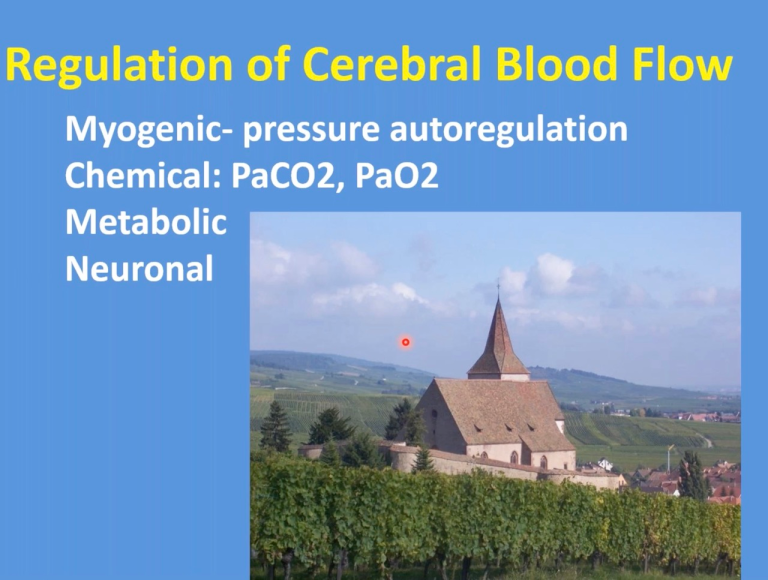
Lecture 3: Autoregulation of Cerebral Blood Flow
Prof Marek Czosnyka talks about mechanisms of regulation: myogenic, metabolic and chemical. Structure of arterial walls, role of endothelium. Macroscopic observations: Lassen’s curve. Dynamic and static autoregulation. With clinical examples
Lecture 7: Cerebral Perfusion Pressure
Prof Marek Czosnyka talks about definitions of cerebral perfusion pressure, source of uncertainty and implication on management protocols. What happens when CPP is too low, and when it is too high?
Lecture 9: Pressure Reactivity
Prof Marek Czosnyka talks about relationship between ICP and arterial blood pressure (ABP). Pressure- reactivity index, computational methods. Clinical examples. Optimization of cerebral perfusion pressure: Relationship between Pressure Reactivity and CPP. Does ‘optimal CPP’ exist always? Implications on management.
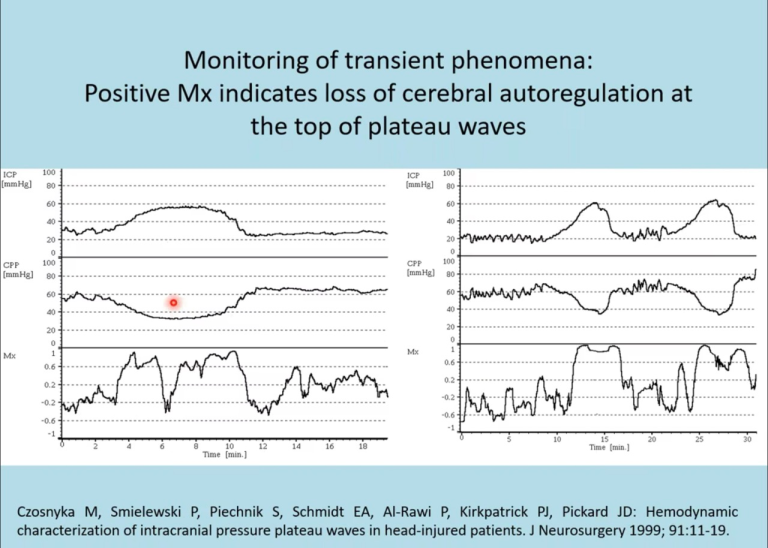
Lecture 18: Monitoring of Cerebral Autoregulation with Transcranial Doppler
Professor Marek Czosnyka talks about ways of extracting information about cerebral autoregulation from Transcranial Doppler measurements
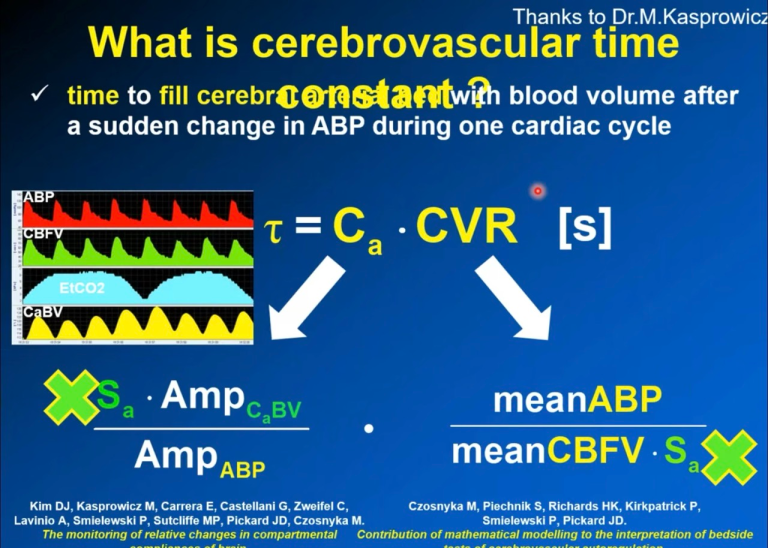
Lecture 20: Time Constant of Cerebrovascular System
Professor Marek Czosnyka talks about applications in Common Carotid Artery Stenotic Disease and cerebral vasospasm following Subarachnoid Hemorrhage. Time constant versus ABP and ICP- experimental design
Lecture 21: Cerebrovascular Impedance
Professor Marek Czosnyka talks about linear modelling of basal cerebral vessels. Is pulsation of blood transport greater than pulsation of arterial blood pressure? Why? Critical closing pressure (CrCP)- theoretical concept versus clinical implications. Use of CrCP to measure ‘real CPP’ or non-invasive estimate of ICP
Lecture 24: Alternative Indices of Cerebrovascular Reactivity
Prof Marek Czosnyka talks about the use of Near Infrared Spectroscopy, tissue oxygenation and other modalities for calculating indices of cerebrovascular reactivity.
Lecture 25: Modelling of Cerebral Blood Flow
Prof Marek Czosnyka talks about experimental projects, instrumentation and models to study physiology and pathophysiology of cerebrovascular dynamics.
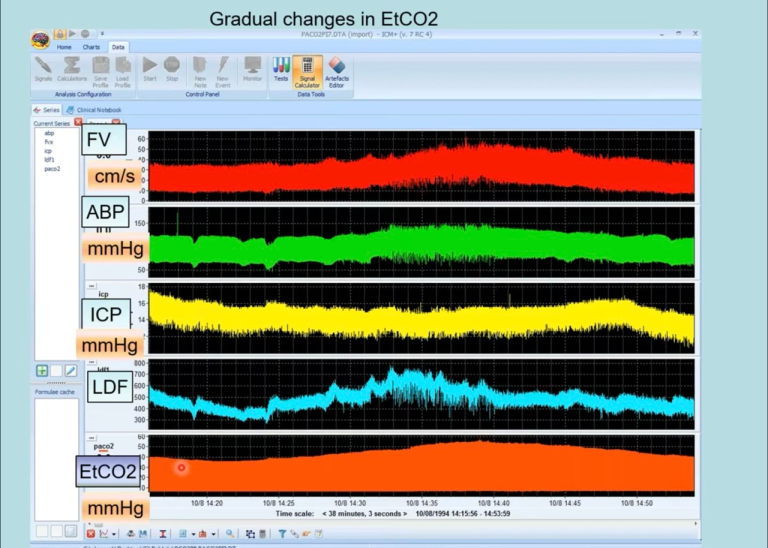
Lecture 26: Experimental Cerebrovascular Dynamics
Prof Marek Czosnyka talks about experimental projects, instrumentation and models to study physiology and pathophysiology of cerebrovascular dynamics.
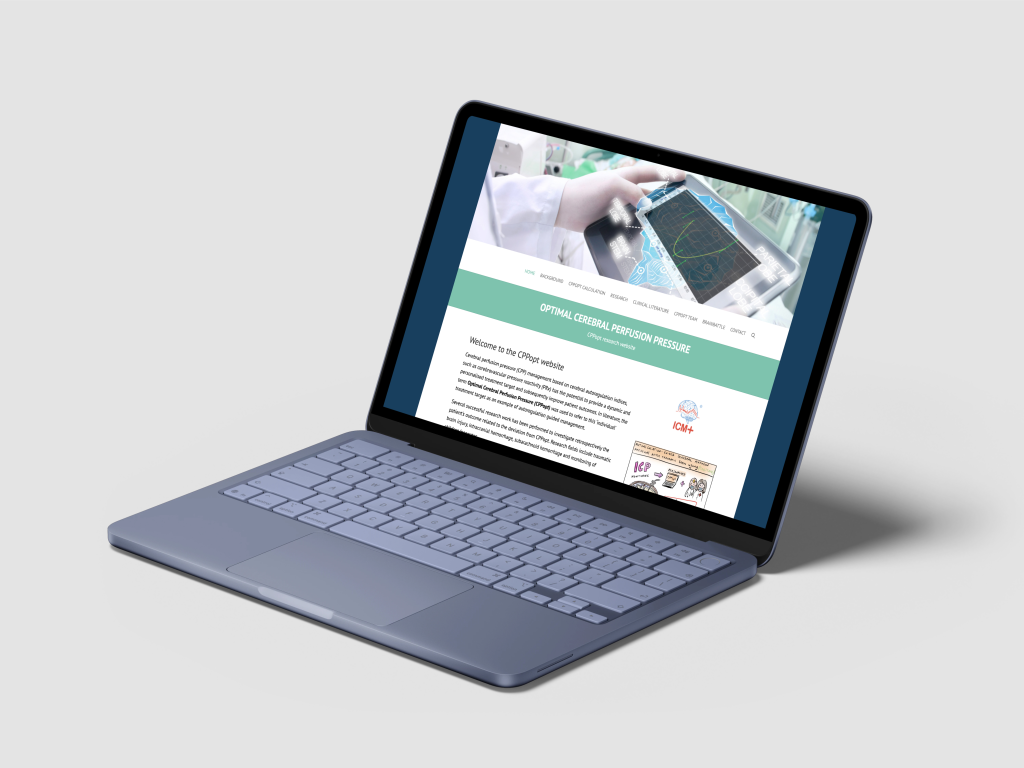
Additional Resources
For further learning and deeper exploration of this topic, you can access a comprehensive collection of resources, research, and educational materials at CPPopt.org. This external site offers valuable insights to support continued understanding and professional development.