
- All
- Case Studies in Neurocritical Care AI
- Brain Matters
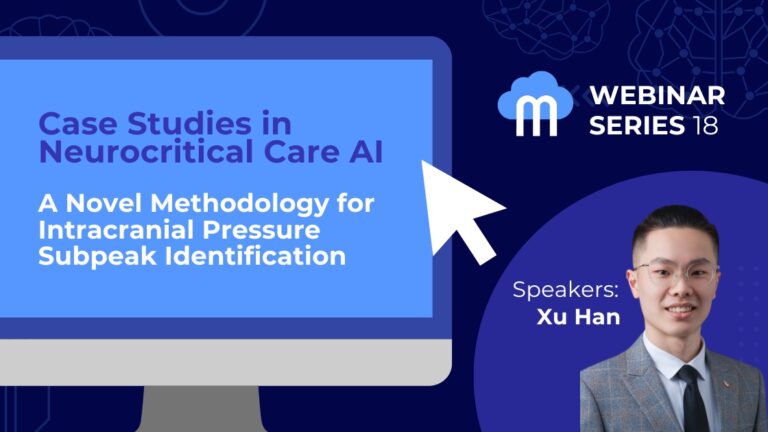

A Novel Methodology for ICP Subpeak Identification
Xu Han, in collaboration with mentors at the University of Cincinnati, presents a new method for identifying subpeaks in ICP waveforms in traumatic brain injury patients. His work improves visualization and computational efficiency, enabling real-time analysis and better patient monitoring.
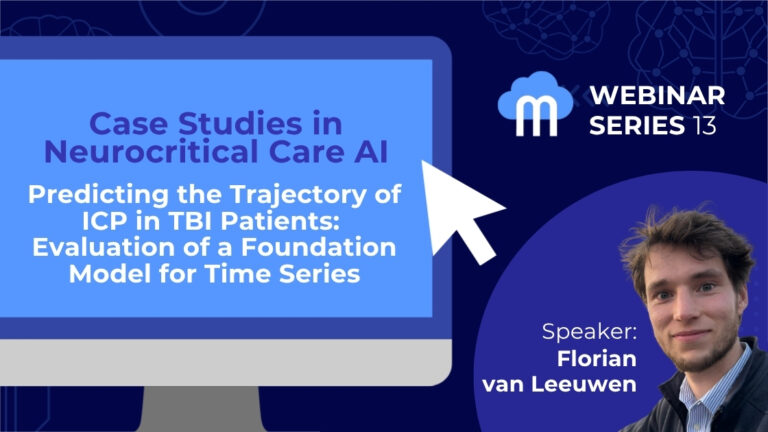
Predicting the Trajectory of ICP in TBI Patients: Evaluation of a Foundation Model for Time Series
Florian van Leeuwen explores whether pre-trained (foundation) models, leveraging the power of transfer learning, hold the key to predicting intracranial pressure changes in TBI patients.
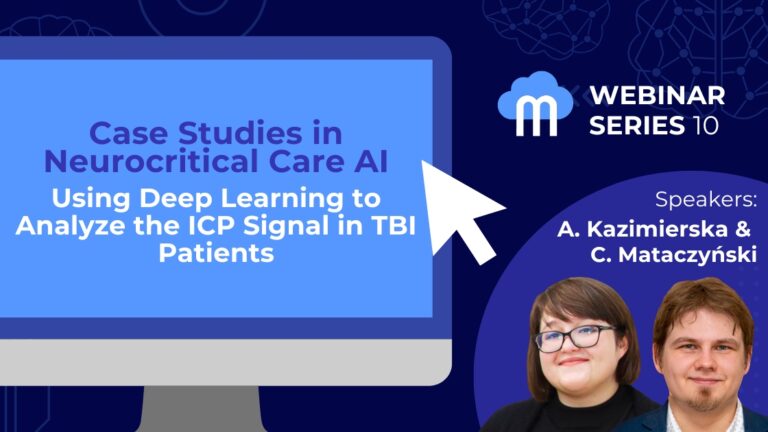
Using Deep Learning to Analyze the ICP Signal in Traumatic Brain Injury Patients
Dr. Agnieszka Kazimierska and Cyprian Mataczyński showcase their deep learning-based approach for analyzing intracranial pressure pulse waveform morphology and predicting potentially life-threatening episodes of elevated ICP.
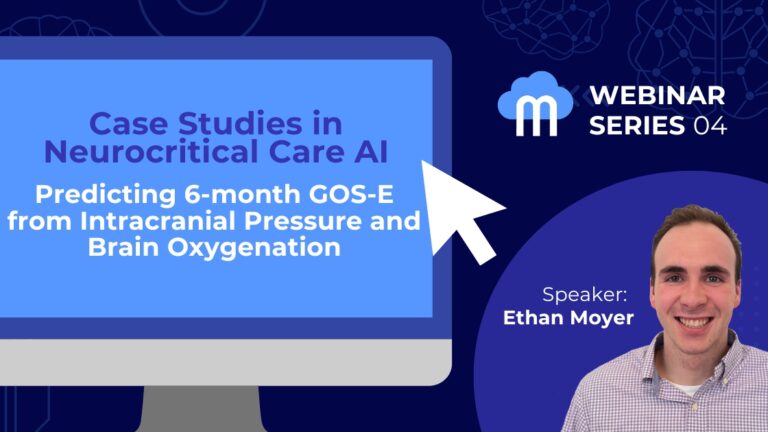
Predicting 6-Month GOS-E from ICP and Brain Oxygenation
Ethan Moyer demonstrates a few techniques for predicting GOS-E outcomes on the BOOST II patients using Python.
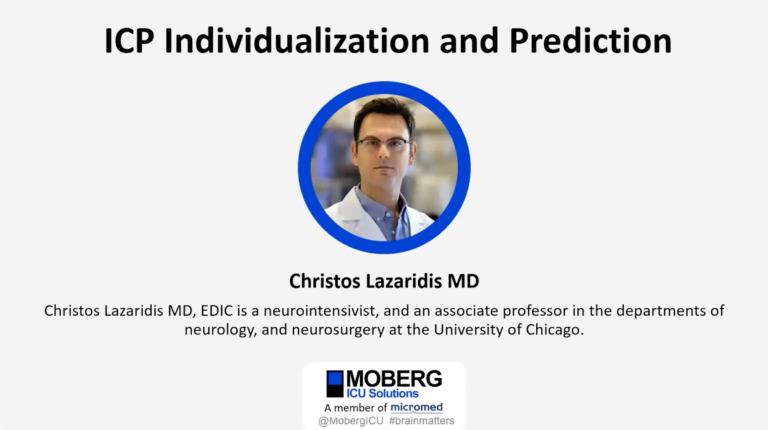
ICP Individualization and Prediction
Christon Lazaridus covers conceptual approaches to intracranial hypertension, patient-specific intracranial pressure, and predicting secondary brain insults.
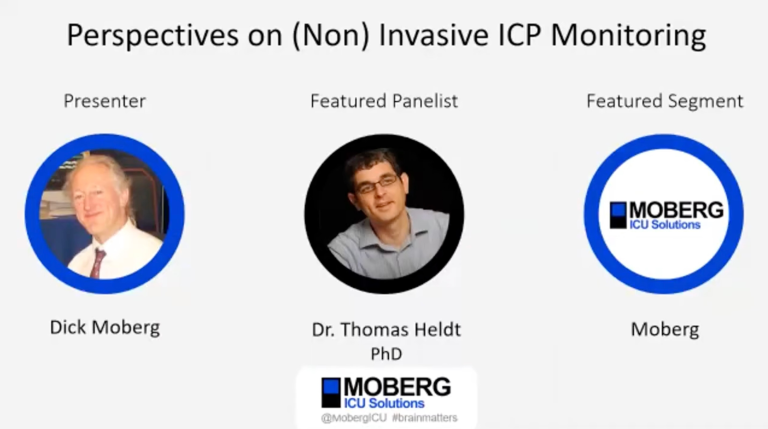
Perspectives on (Non) Invasive ICP Monitoring
Dr. Heldt provides a review of some important concepts when monitoring ICP. He also gives an overview of research in recording this important cranial vital sign non-invasively. Learn about The Integrative Neuromonitoring and Critical Care Informatics Group. http://neuro.mit.edu/
The Brain Oxygen Optimization in Severe TBI (BOOST) Phase 3 study: Towards evidence based medicine in the neurological ICU
Dr. Ramon Diaz-Arrastia, MD, PhD, from the University of Pennsylvania, presents the scientific and clinical rationale for monitoring brain tissue oxygen pressure, summarizes the results of the BOOST Phase 2 study, and discusses the design of the BOOST Phase 3 study, which will be launched in the first quarter of 2019.
Non-invasive Intracranial Pressure - A Conversation with Dr. Jana Kainerstorfer
Dr. Kainerstorfer is using diffuse correlation spectroscopy to tease out non-invasive ICP in the brain. Her early work at Carnegie Mellon has proven successful. She relates how she got into this field and her journey to Carnegie Mellon.
CranioSense - Non-invasive Intracranial Pressure
We talk with Ryan Myers PhD who has just spun off a company from Vivonics to commercialize their technology for the non-invasive assessment of ICP.
The ICP 2019 Meeting & Smart Monitoring of ICP with Dr. Bart Depreitere & Dr. Geert Meyfroidt
Dr. Geert Meyfroidt, intensivist, and Dr. Bart Depreitere, neurosurgeon, from KU Leuven, share their thoughts on the ICP 2019 meeting in Leuven, Belgium and discuss their research activities at the university.
ICP Monitoring: A Standard of Care with No Standards with DaiWai Olson
DaiWai Olson (PhD, RN, CCRN), Professor of Neurology, Neurotherapeutics, and Neurological Surgery at the University of Texas Southwestern, discusses shortcomings and inconsistencies in current ICP monitoring practices.
Establishing a Multimodal Monitoring Program with Dr. Claude Hemphill
Dr. Claude Hemphill, Professor of Neurology at UCSF and Division Director at Zuckerberg SFGH, explains the benefits and challenges of establishing a multimodal monitoring program. This episode is filmed at the ICP 2019 meeting Leuven, Belgium.
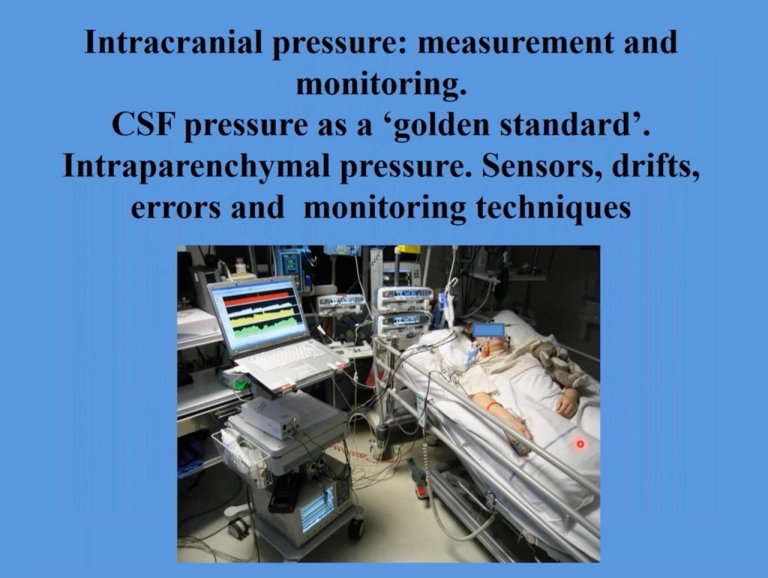
Lecture 4: Intracranial pressure
Professor Marek Czosnyka (Clinical Neurosciences at Cambridge, UK) talks about measurement and monitoring of intracranial pressure: CSF pressure as a ‘golden standard’. Intraparenchymal pressure. Sensors, drifts, errors and monitoring techniques
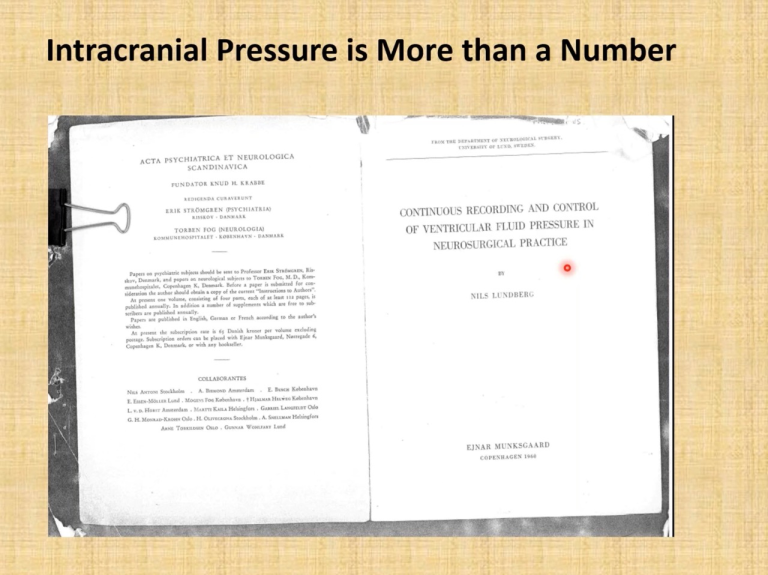
Lecture 6: ICP is More Than the Number
Prof Marek Czosnyka talks about waves and fluctuations of intracranial pressure (ICP) and their interpretation. Slow and respiratory waves. Spectral components of ICP
Lecture 8: Waveform Analysis of Intracranial Pressure
Prof Marek Czosnyka talks about intracranial pressure pulse analysis including high frequency centroids and morphological methods, and their clinical associations.
Lecture 10: Pressure-Volume Compensatory Reserve
Prof Marek Czosnyka talks about Pressure-Volume Index, RAP index. Applications in hydrocephalus and head injury.
Lecture 19: Compartmental Compliances of Brain
Professor Marek Czosnyka talks about assessment of cerebral arterial compliance and lumped compliance of CSF and venous pool. Monitoring of Monro-Kelly doctrine: Mutual relationship between brain compartmental compliance as a marker when intracranial hypertension becomes ‘refractory’
Lecture 22: Non-Invasive Methods for ICP Monitoring
Professor Marek Czosnyka talks about transcranial Doppler flowmetry derived assessment of intracranial pressure non-invasively and other useful methods
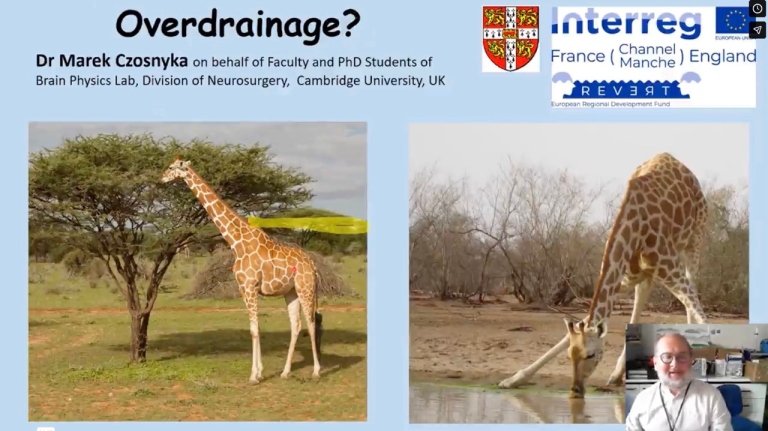
Lecture 29: CSF Shunt Overdrainage
Prof Marek Czosnyka of Brain Physics lab, Cambridge, UK, delivers a lecture on cerebrospinal fluid shunt overdrainage problems, the causes, the consequences and methods for evaluation.
Lecture 30: Intracranial Pressure and CSF Flow
Prof Marek Czosnyka delivers a lecture on the cerebrospinal fluid circulation and pressure dynamics – updated 2022.